What Are the Best PVC Floor Mats for Home from China?
Choosing the best PVC Floor Mats For Home from China requires more than comparing patterns and prices. A useful mat must fit the room, resist daily wear, and feel stable underfoot. Kitchens need water-resistant surfaces and easy cleaning. Entryways need stronger wear resistance and textured backing. Bedrooms may benefit from softer finishes and quieter contact.
Flooring consultant Jamie Gold, a wellness design specialist, says, “A floor should support health, comfort, and daily living—not merely look attractive.” This principle matters when reviewing Chinese suppliers. Look for clear material descriptions, consistent thickness, low-odor construction, and reliable dimensional stability. A mat that curls beside a kitchen cabinet quickly becomes a safety concern. A thin product may also slide on smooth tile, especially near a sink.
Factory evidence matters. Request product samples, edge photos, backing details, and test information before making a large purchase. Check whether the supplier explains plasticizer use, surface care, and packaging conditions. Responsible manufacturers should communicate plainly. Vague claims deserve questions.
Not every attractive mat performs well. Some printed designs fade faster than expected. Some backing layers feel secure at first, then loosen after repeated washing. That choice is not always perfect. Home conditions differ, and a product tested in a showroom may behave differently beside a sunny window.
This guide examines practical options, supplier signals, cleaning needs, and room-specific performance. It also considers comfort, appearance, and long-term value. The goal is not to praise every Chinese product, but to identify choices that make sense in real homes.

What Are PVC Floor Mats and Why Are They Suitable for Homes?
What Are PVC Floor Mats and Why Are They Suitable for Homes?
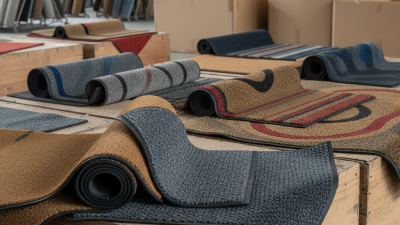
PVC floor mats are flexible surfaces made from polyvinyl chloride, plasticizers, and stabilizers. They are commonly used in kitchens, bathrooms, entryways, and laundry areas. Their closed surface helps resist spilled water, cooking oil, and everyday dirt. Cleaning usually requires warm water and a mild detergent.
According to PlasticsEurope’s Plastics—The Facts 2023 report, PVC represented about 9.6% of European plastics demand in 2022. This shows its continuing industrial importance, but it does not prove that every mat is safe or durable. Independent testing still matters. For Chinese suppliers, request test reports covering abrasion resistance, slip resistance, dimensional stability, and emissions. Standards such as ISO 10582 and EN 14041 can help buyers compare flooring performance more professionally. From practical use, thicker mats feel more stable underfoot. However, thickness alone can be misleading.
Tips: Choose a textured underside for smooth tile. Check whether edges curl after heat exposure. Ask for phthalate and heavy-metal testing. Ventilate new mats before indoor use. Inspect the smell.
PVC is easy to maintain, but it is not perfect. Poorly formulated products may become brittle, slippery, or odorous over time. A better purchase balances material quality, surface texture, safety documentation, and the room’s actual moisture level.
Which Types of PVC Floor Mats Are Best for Different Rooms?
For each room, the best PVC floor mat depends on moisture, traffic, and cleaning habits. Grand View Research estimated the global resilient flooring market at about USD 41 billion in 2023. PVC remains important because it is flexible, water-resistant, and comparatively easy to process.
Kitchens
need dense, non-slip PVC mats with sealed edges. Choose a textured surface for grease-prone areas near the sink and stove. A thickness of 3–6 millimeters can reduce foot fatigue. However, thicker is not always better. Deep textures may trap crumbs and demand frequent cleaning.
Bathrooms
use perforated or drainage-style mats with strong suction backing. Check slip-resistance test results, not just the supplier’s description. A wet-floor trial is still necessary.
Living rooms usually suit softer foam PVC mats with wood, stone, or woven patterns. They feel warmer under bare feet and can protect floors from small spills.
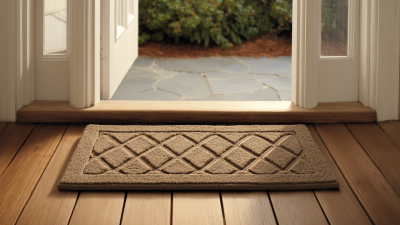
Entryways need heavier, low-profile mats that capture grit without blocking doors.
Bedrooms may use lightweight, low-odor PVC mats, especially beside beds or wardrobes. The U.S. Environmental Protection Agency links moisture control with healthier indoor environments, so ventilation and drying matter too.
When sourcing from China, request thickness tolerance, abrasion results, chemical compliance documents, and batch samples. I would not trust a single showroom sample. Color, smell, and flexibility can change between production batches.
What Sizes, Textures, and Designs Should Homeowners Choose?
Homeowners choosing PVC floor mats from China should match size to traffic, not only room dimensions. For a compact entryway, 45 × 75 cm fits beneath most shoes. A 60 × 90 cm mat catches more grit near a busy door. Long runners suit kitchens and balconies, but measure door clearance first. A 1.5–2.5 mm profile usually bends easily. Thicker mats feel steadier, yet doors may scrape. I have seen attractive mats fail because clearance was ignored.
Texture affects safety and cleaning.
Raised pebble or crosshatch surfaces improve grip around wet entrances. Fine embossing feels comfortable under bare feet and traps less dust. Deep grooves can collect crumbs, especially in kitchens. Grand View Research’s 2024 Vinyl Flooring Market report estimated the global market at USD 40.79 billion in 2023, with a projected 7.4% CAGR through 2030. Fortune Business Insights reported a different 2023 estimate, about USD 39.35 billion. The gap reflects different market definitions, so numbers need careful reading.
Design should support the room’s scale. Woodgrain suits warm interiors, while terrazzo or geometric patterns hide small stains. Very pale colors show dirt quickly. Very dark colors show lint. Ask Chinese suppliers for samples before ordering bulk quantities. Check edge curling, odor, thickness tolerance, color consistency, and surface recovery after furniture pressure. Request current test documents for slip resistance, abrasion, VOC emissions, and restricted substances. Photos can mislead. Small samples reveal more. A practical compromise may outperform a fashionable pattern.
How to Select a Reliable Chinese PVC Floor Mat Supplier?
When choosing a Chinese PVC floor mat supplier, inspect more than attractive samples. Grand View Research estimated the global resilient flooring market at about USD 40.8 billion in 2023, with continued growth through 2030. This expansion increases supplier choices, but also makes verification harder. Ask for factory ownership details, production capacity, quality procedures, and recent third-party test reports. A trading company may be suitable, yet its manufacturing source must remain transparent.
Check the mat’s thickness, surface wear, dimensional stability, slip performance, odor, and plasticizer migration. Request test methods, not only certificates. ISO 9001 can indicate a quality management system, but it does not prove every batch meets your requirements. The European Chemicals Agency identifies restrictions on several substances used in plastic products, so request current material declarations for your target market. Keep the paperwork.
Sample approval should include a real-use trial. Place the mat near a kitchen entrance for several weeks. Observe curling, color change, edge lifting, and cleaning response. Ask the supplier to reproduce the approved sample’s construction and color tolerance. Some suppliers provide excellent samples, then outsource production. That risk is easy to overlook. A pre-shipment inspection can compare finished goods against agreed specifications. According to Mordor Intelligence, Asia-Pacific remains a major flooring production and consumption region, supporting competitive sourcing but also requiring stronger supplier screening. I would also request batch codes, retention samples, and a written complaint process. Small details matter.